
Every business you see around you has a website or wishes it did. Every startup building a product needs developers. A brand looking to grow online needs someone who can build and maintain their digital presence.
Web development is not just one of the most in-demand skills in tech right now. It is one of the most accessible.
If you are in Uyo and looking for where to learn web development properly, Netisens ICT offers a 6-month Front-End Web Development course that takes you from complete beginner to a developer who can build real, deployed websites and web applications.
What Is Web Development and What Are the Different Types?
Web development is the process of building websites and web applications. It splits into three main areas:
- Front-End Development. This is everything the user sees: the layout, colours, buttons, animations, and how the site responds to interactions. Front-end developers build the visual layer of the web using HTML, CSS, and JavaScript.
- Back-End Development. This is the part users cannot see: the servers, databases, and logic that power the website behind the scenes. Languages include Python, Node.js, and PHP.
- Full-Stack Development. A full-stack developer handles both front-end and back-end work. They can build and deploy a complete web application from scratch.
The Netisens ICT course focuses on Front-End Web Development, which is the strongest starting point for most learners. It teaches you the tools you can see and interact with immediately, builds your portfolio fast, and lays the groundwork for specializing further.
What Will You Learn in the Web Development Course at Netisens ICT?
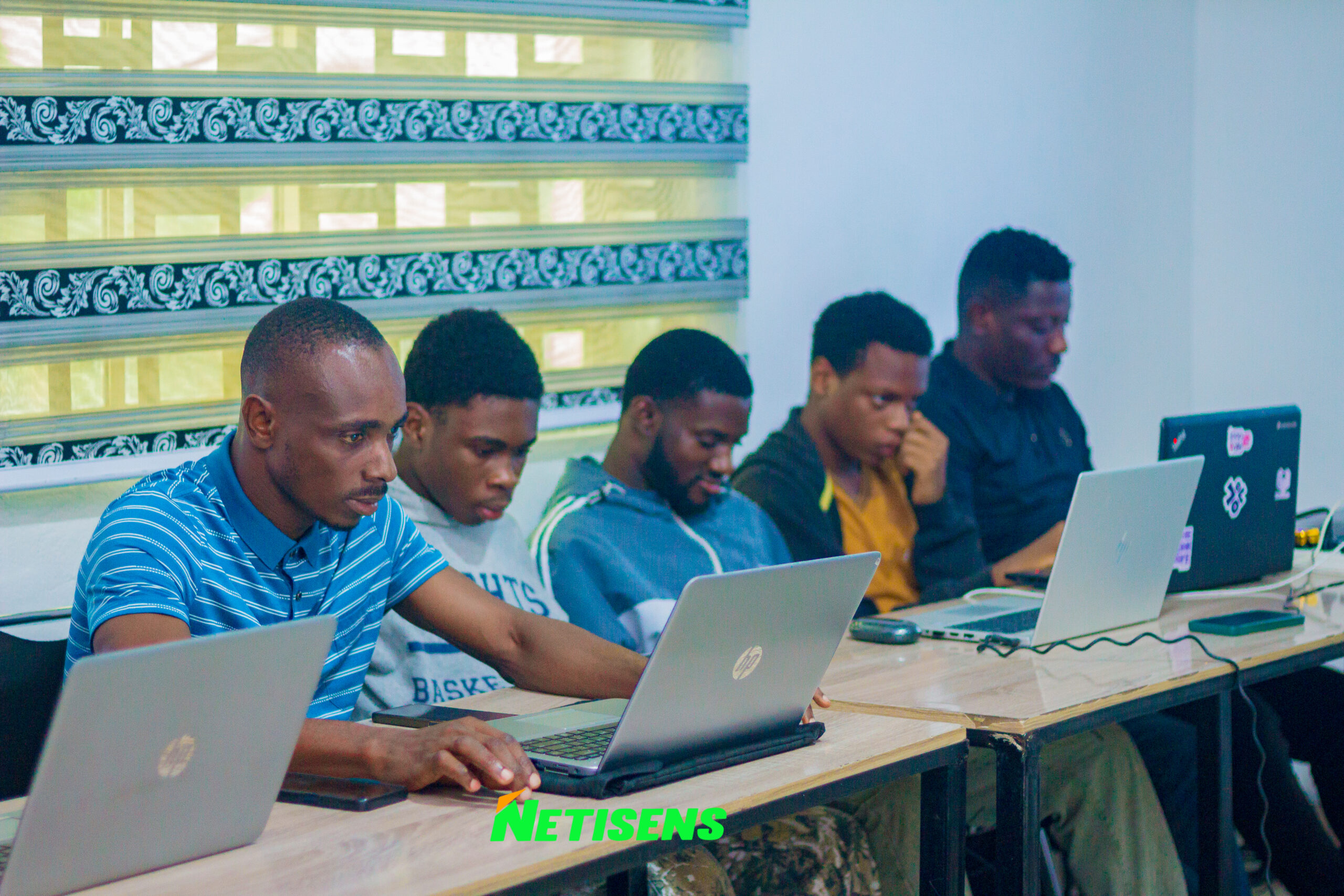
The Front-End Web Development course at Netisens is a 6-month, in-person, fully hands-on program. Here is what the curriculum covers:
HTML: The Structure of Every Web Page
HTML (HyperText Markup Language) is the skeleton of every website. You will learn how to structure content, build forms, create navigation menus, and embed media. MDN Web Docs is the reference professionals use, and you will learn to read and use it confidently.
CSS: Making Websites Look Good
CSS (Cascading Style Sheets) is how you control the visual appearance of a website. Colours, fonts, spacing, layouts, and responsive design all come from CSS. You will master Flexbox and CSS Grid, the two layout systems that every modern developer needs.
Responsive Design
A website that only looks good on a desktop is useless in a world where most people browse on their phones. You will learn how to build websites that adjust beautifully to any screen size, from mobile to tablet to desktop.
JavaScript: Making Websites Interactive
JavaScript is what makes websites do things. Form validation. Dropdown menus. Sliders. Pop-ups. Real-time updates. JavaScript is the programming layer of the web, and you will build a solid foundation in it during the course.
React
React is the most widely used JavaScript library for building web applications. Companies like Meta, Airbnb, and Netflix use React. Learning it makes you significantly more hireable than knowing plain JavaScript alone.
Version Control with Git and GitHub
Professional developers do not email files to each other. They use GitHub to track changes, collaborate, and manage code. You will learn Git from scratch and build a GitHub profile that shows potential employers your actual work.
Portfolio Projects
Theory does not get you hired. Projects do. By the end of the course, you will have built and deployed multiple projects including a personal portfolio website, a responsive business landing page, and at least one React web application.
Ready to start? Chat with Netisens ICT on WhatsApp and get details on the next intake.
Why Learn Web Development at Netisens ICT in Uyo?
- 8+ years training tech professionals in Akwa Ibom. 2,890+ students trained across all disciplines.
- Fully in-person and hands-on. You build real projects in a real classroom, not alone in front of a YouTube video.
- Expert instructors with real web development experience. They review your code, spot your mistakes early, and push you to produce work you are proud of.
- NITDA and 3MTT aligned. Government-recognized training that gives your certificate credibility with employers.
- Career support. CV review, interview coaching, and connections to companies actively hiring web developers.
- A strong learning community. You learn alongside other students who keep you accountable, and you build professional relationships that outlast the course.
What Career Opportunities Are Available After Web Development Training?
Web development is one of the most flexible careers in tech. Here is where it can take you:
- Front-End Developer. Build the visual layer of websites and web applications for companies and agencies.
- Full-Stack Developer. After mastering front-end, many developers learn a back-end language and become full-stack. Full-stack developers are among the most in-demand engineers globally.
- React Developer. Specialize in React and work on the web applications that power modern businesses.
- Freelance Web Developer. Build websites for local businesses, entrepreneurs, and international clients. Many Nigerian developers earn in dollars on Upwork and Fiverr.
- UI/UX Developer. Combine web development with product design skills to build user-friendly interfaces. See the Product Design course at Netisens ICT.
- WordPress Developer. Many Nigerian businesses use WordPress. Knowing how to build and customize WordPress sites is a consistent, reliable income stream.
- Web Development Instructor. With experience, you can teach others. This is a rewarding career path for those who enjoy mentoring and education.
Junior web developers in Nigeria earn between N150,000 and N400,000 per month. Mid-level developers can earn N500,000 to N700,000 or more. Freelancers working with international clients often earn significantly more in dollars.
Who Is the Web Development Course Good For?
- Complete beginners who have always been curious about how websites are built
- Students and fresh graduates who want a practical, high-income tech skill
- Business owners who want to understand web technology well enough to manage their own website
- Designers who want to bring their designs to life in code
- Anyone who wants to work remotely or freelance and earn from their laptop
Frequently Asked Questions About Web Development Training in Uyo
Do I need to know how to code before starting?
No. The course starts from the very beginning with HTML. Zero prior coding experience is required.
How long is the course?
6 months. Full in-person, hands-on training at the Netisens ICT hub in Uyo.
What will I be able to build after the course?
Responsive websites, business landing pages, portfolios, and React web applications. You will also be prepared to take on freelance web development projects.
Can I get a remote job after completing the course?
Yes. Web development is one of the most remote-friendly careers in tech. With a strong portfolio and a GitHub profile, you can apply to remote roles and freelance platforms globally.
What is the difference between front-end and full-stack development?
Front-end development covers what users see and interact with. Full-stack covers both the visual layer (front-end) and the server-side logic (back-end). The Netisens course covers front-end thoroughly. Full-stack development is typically the next step for developers who want to expand their skills.
Where is Netisens ICT?
133 Atiku Abubakar Way, Uyo, Akwa Ibom State, Nigeria. Classes run Monday to Friday, 8am to 5pm, and Saturday, 9am to 3pm WAT.
Start Your Web Development Journey in Uyo Today
The internet is not slowing down. Every year, more businesses come online. More products are built on the web. More Nigerian companies need developers.
The people building those products are the ones who started learning, who showed up to class, built their projects, and put in the work.
You can be one of them. And you can start in Uyo.
Enroll via WhatsApp · Send an Email · View All Courses · About Netisens ICT
Also explore: Where Can I Learn Python Programming in Uyo? | Where Can I Learn Product Design (UI/UX) in Uyo? | 5 In-Demand Tech Skills to Learn in 2026
